Redesign of Sustainability Web Platform
Category: SaaS • Time: 4 Months • 2021/2022
Redesign of an existing B2B sustainability engagement platform and implementation of new functionality for different user groups. Scope covered UX research, concept, prototyping and UI design.
Results
Development of new prototypes for each of the user groups, hand-over to the development team. Details of the platform are confidential, so it is not possible to show details of the platform online, but examples of my work can be shown in a personal conversation.
UX Design Intern acting as sole UX owner, working alongside a Product Manager and a graphic designer.
The platform helps companies engage their employees in sustainability topics through individual and collaborative learning flows. Early usability testing showed that users wanted a simple, visual way to track their progress. The companies first customers, reacted differently to the same concepts. They wanted to see quantifiable data, not graphics. At the same time, investor conversations kept surfacing new feature requests specific to individual customers and the UI risked becoming overloaded for the average user.
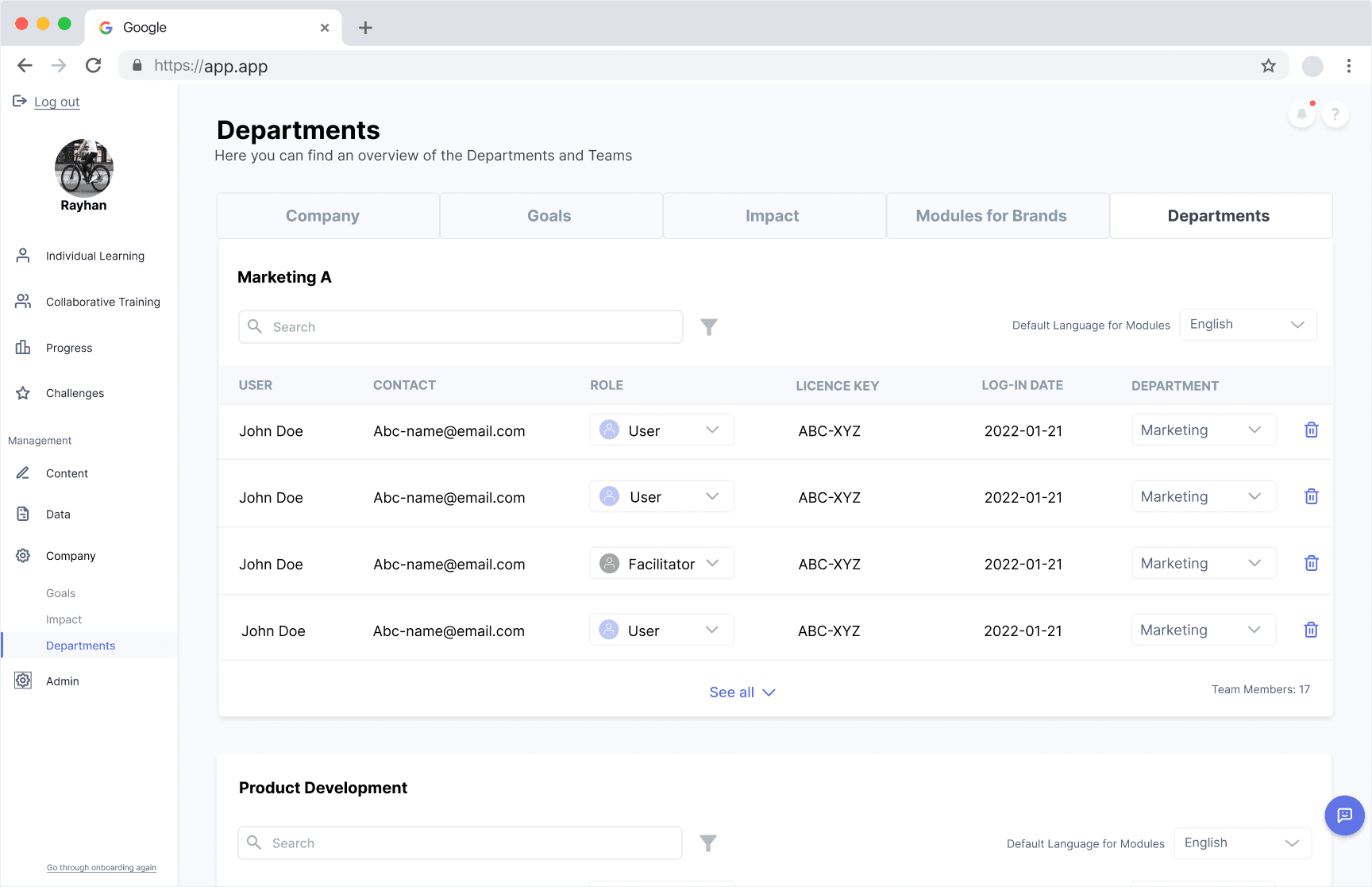
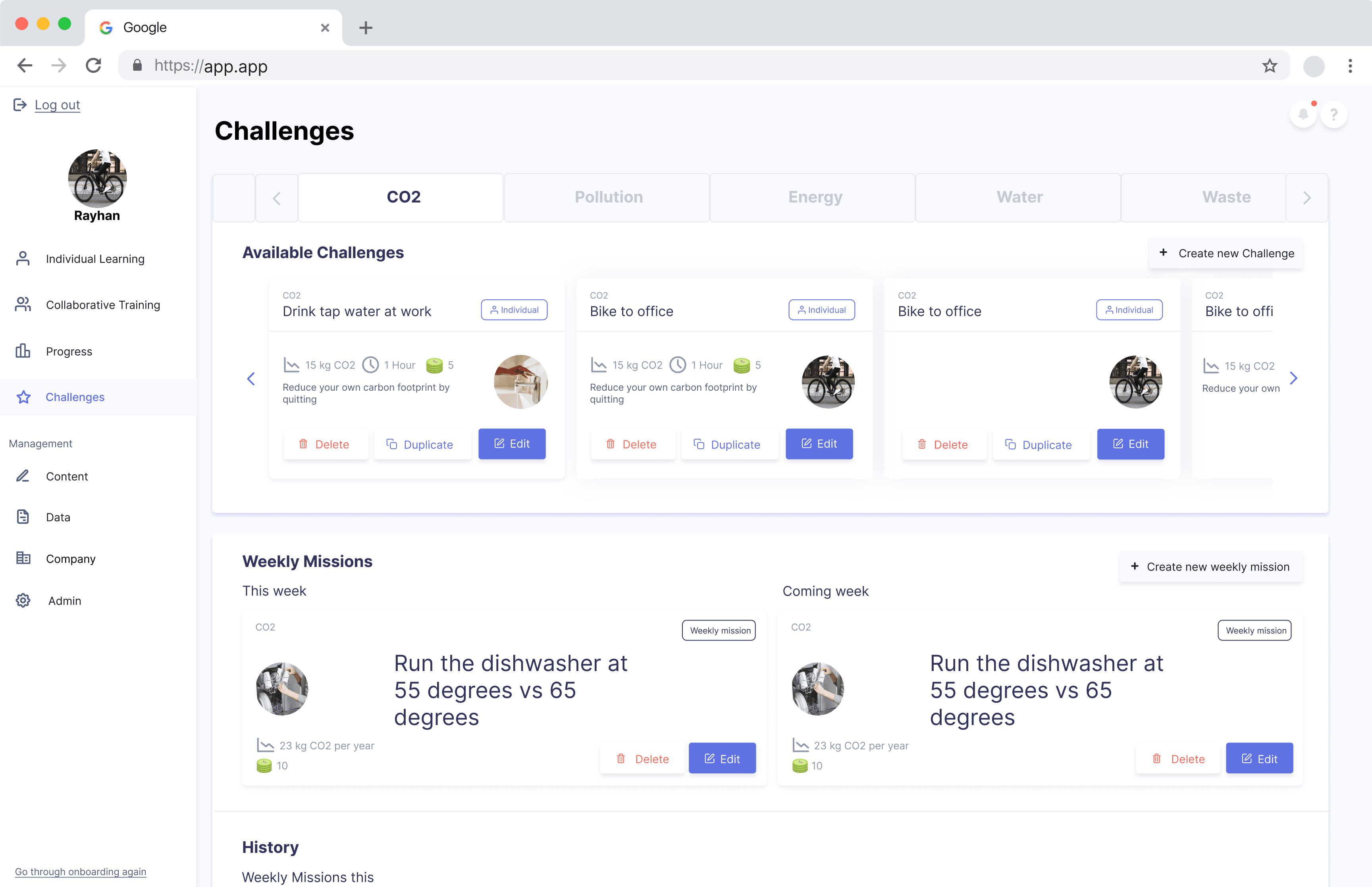
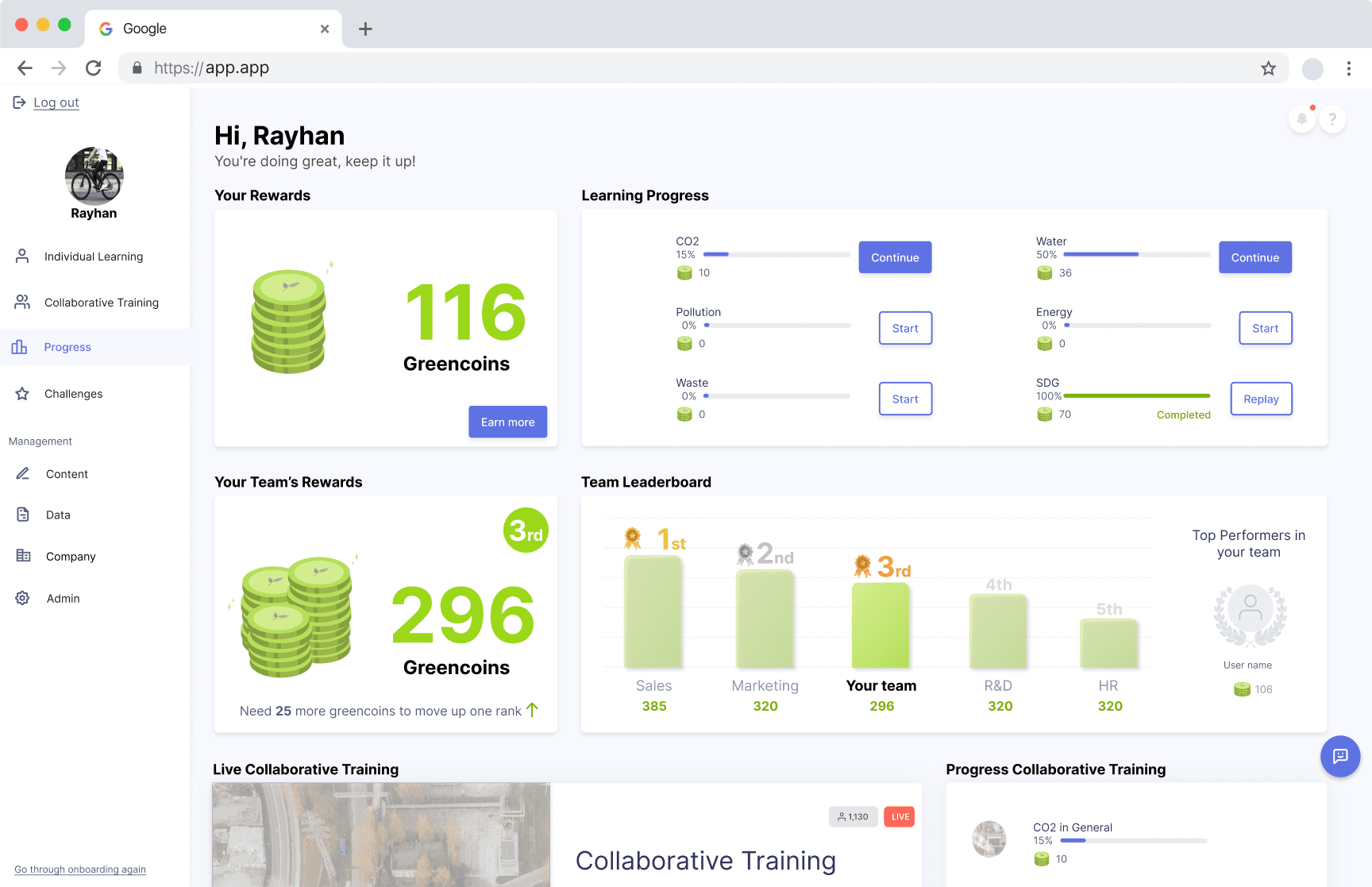
Instead of building every request into one shared UI, the proposal I made to the team was making functionality configurable per customer. The team decided that each company would see only the features relevant to their payed plan, with additional modules available on top. This let us solve investors requests without compromising the experience for everyday users. I designed a more data-oriented reporting view for admins and investors as well as a view for users showing their progress in a graphical way.
Employees of client companies, across three roles with different access levels including general user, project manager, administrator
Review of Platform
Review of the existing platform features to define key functionalities and additional ones for new user groups, considering feedback from stakeholders and customers.
Design Thinking workshops
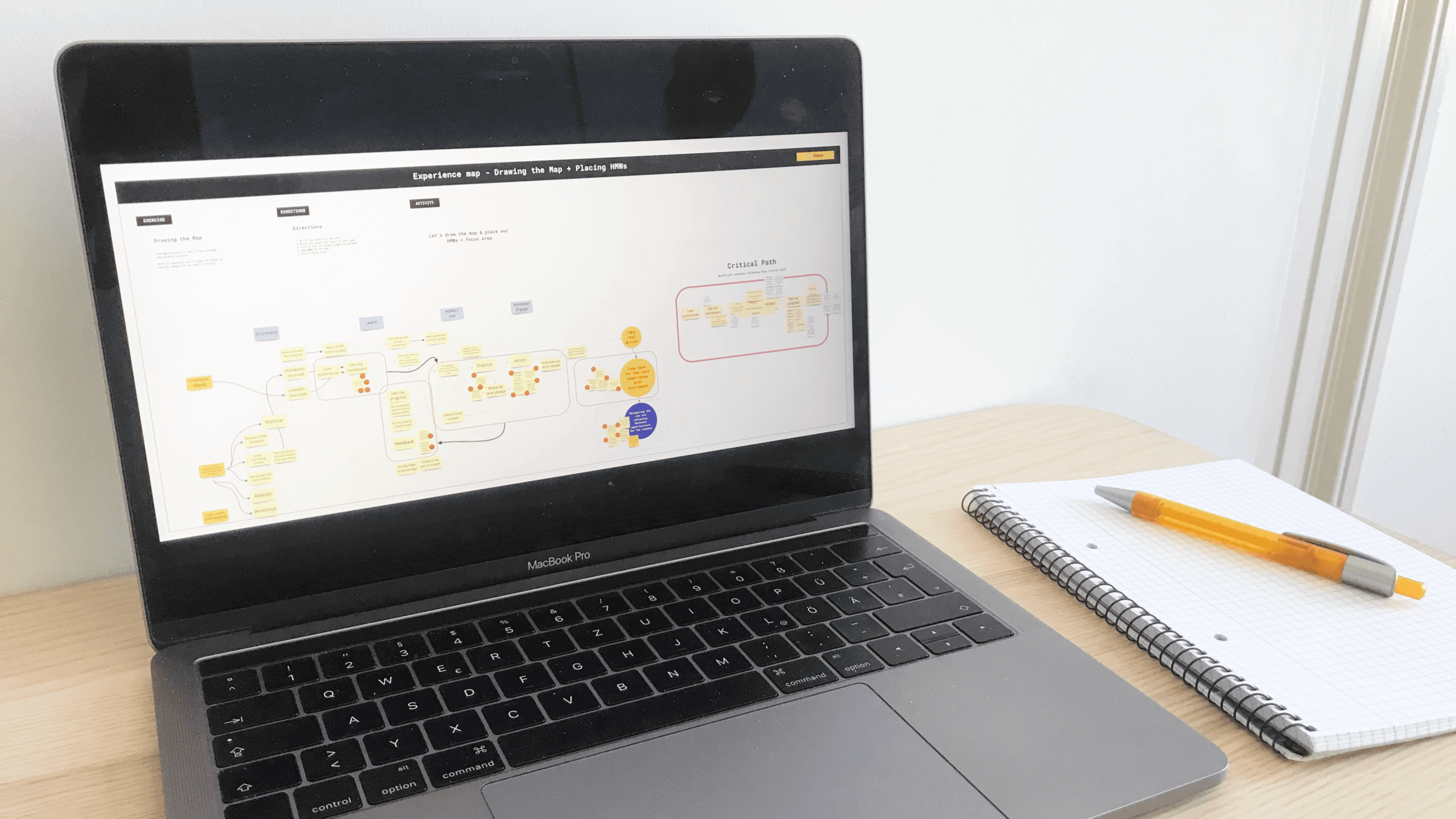
For the redesign, two Design Thinking workshops were carried out to identify user pain points, create personas for the user groups, brainstorm new ideas and set future goals for the platform.
Paperprototyping & Wireframing
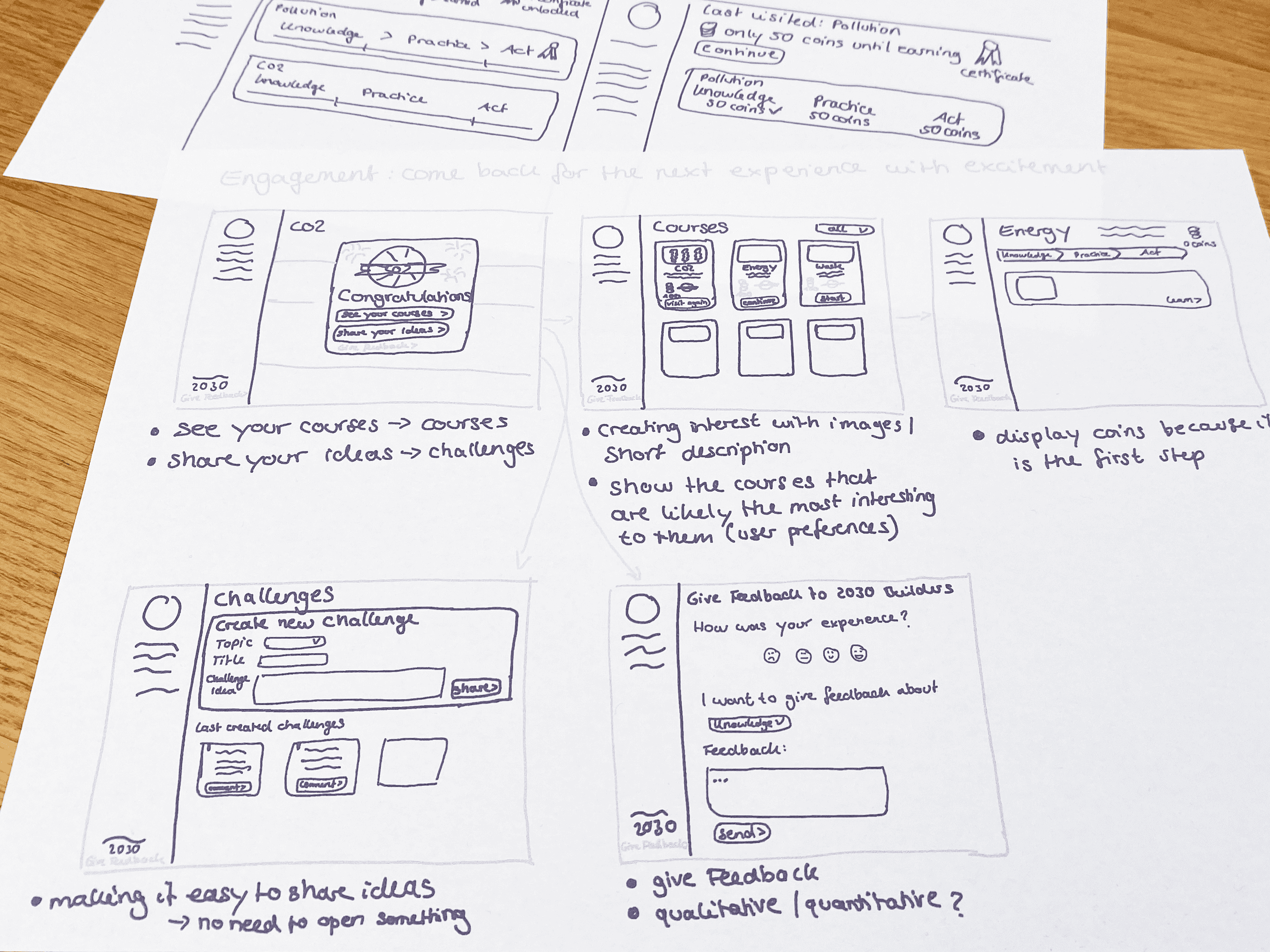
Based on the workshop results, insights of previous usability tests and stakeholder feedback, the functionalities were defined. Afterwards, several sketches were created and put into a selection process inside the team. Ideas concluded from the versions made, were implemented in paper prototypes and subsequently in wireframes after further review.
Usability Test
Further I planned and carried out Usability Tests with project managers and platform users. Based on the test results and feedback from sustainability experts and customers, the prototype were created adjusted accordingly. Additionally, further iterations of different functionalities and the design were made in this process.
UI Design
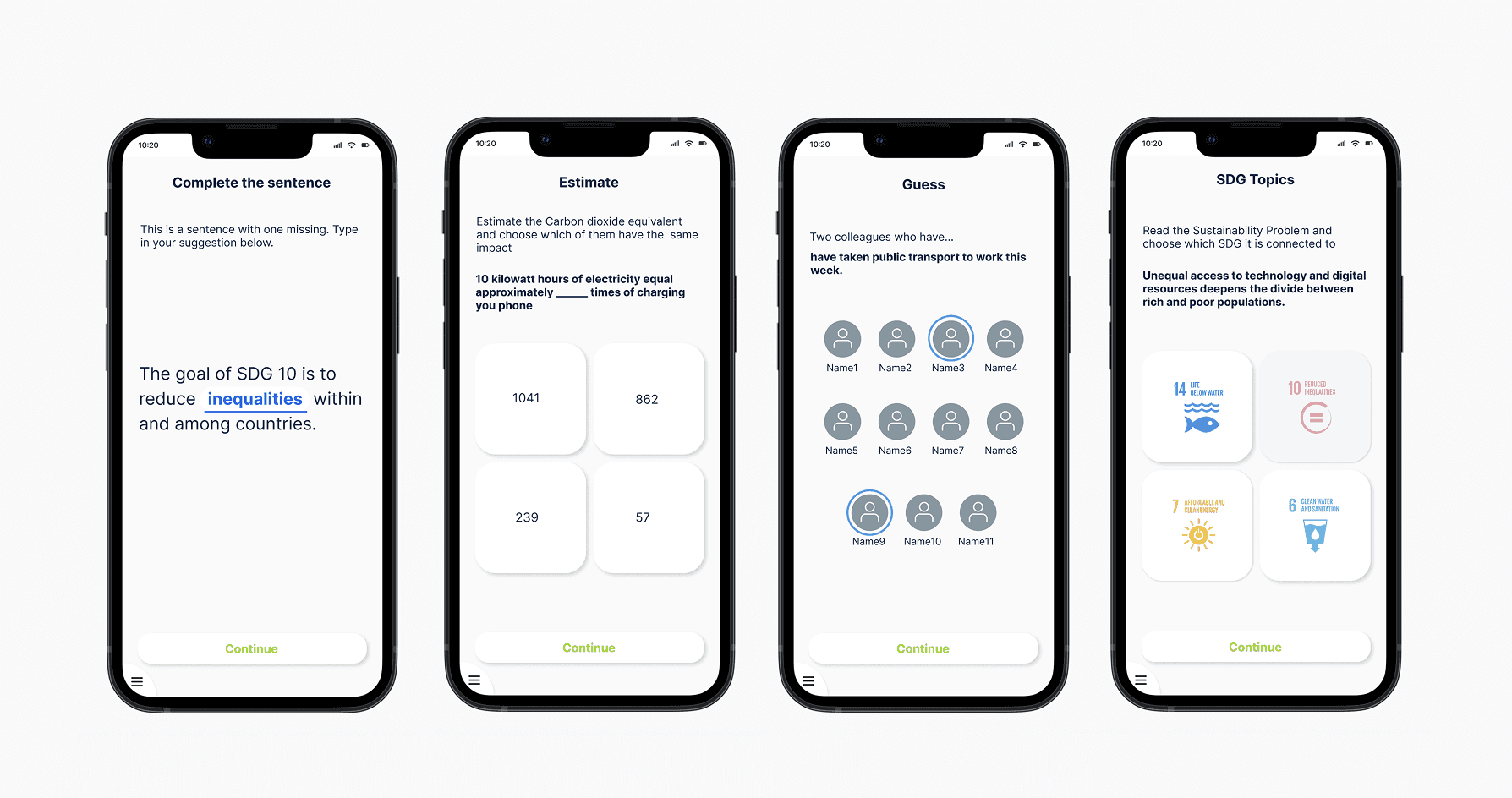
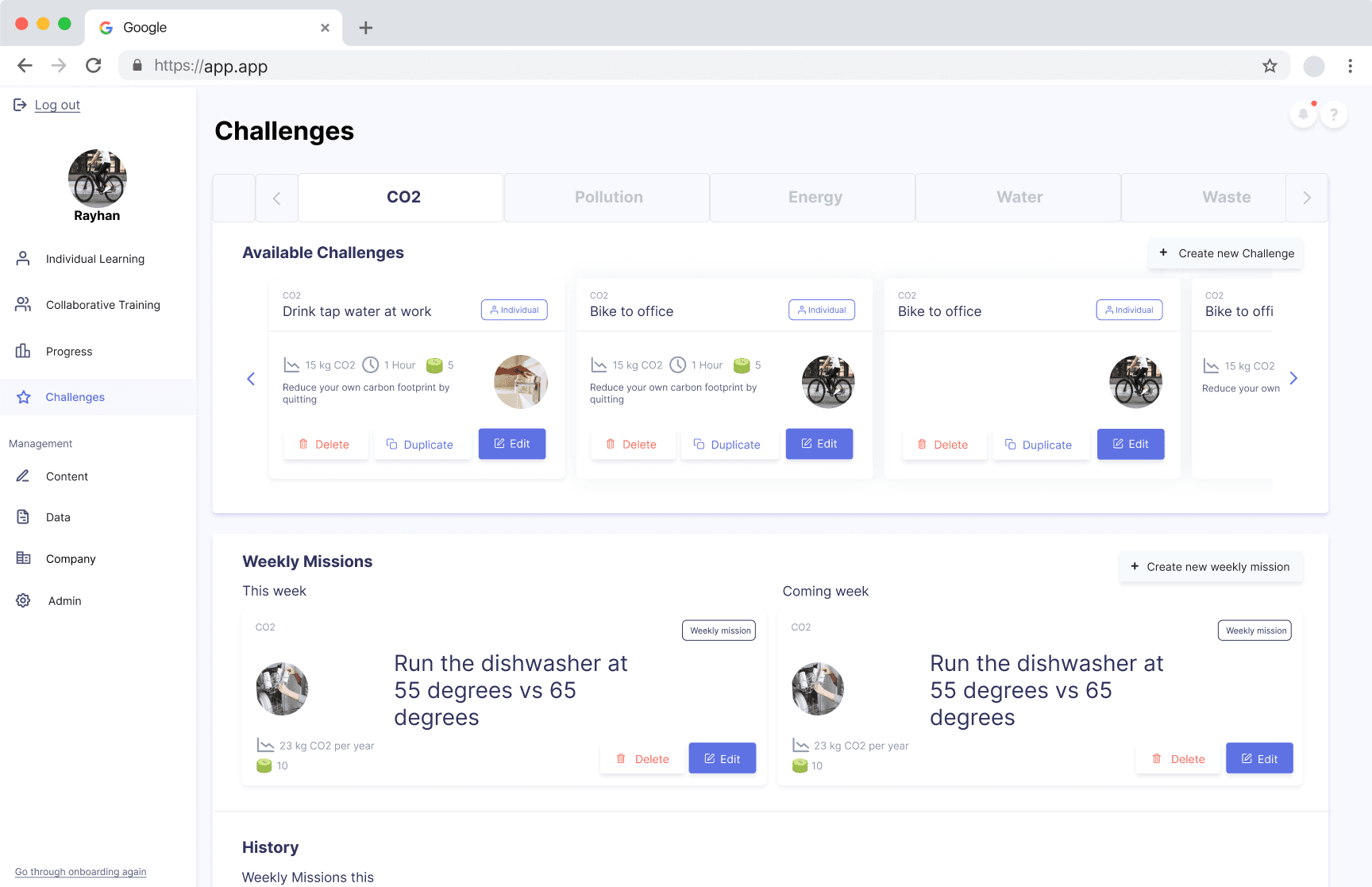
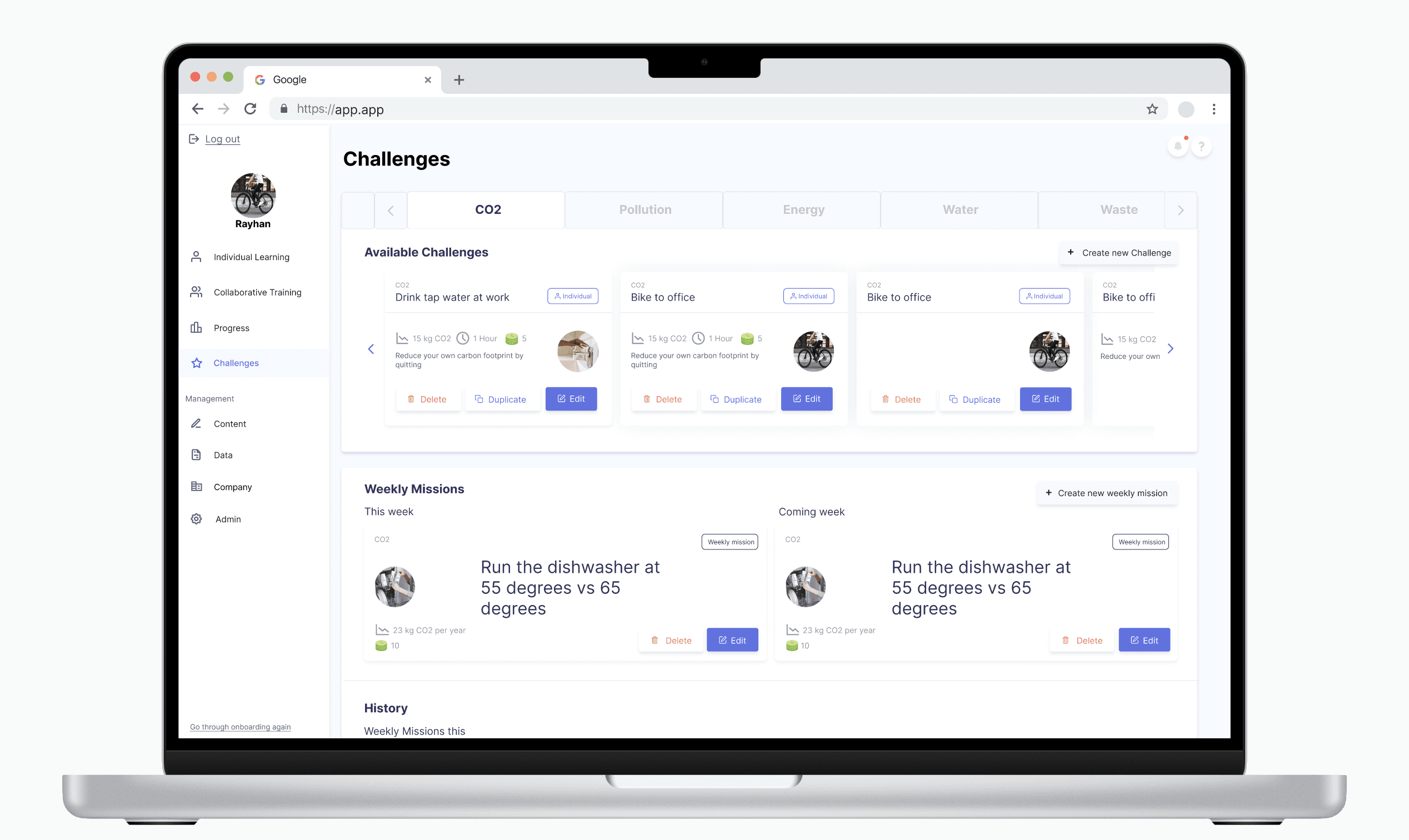
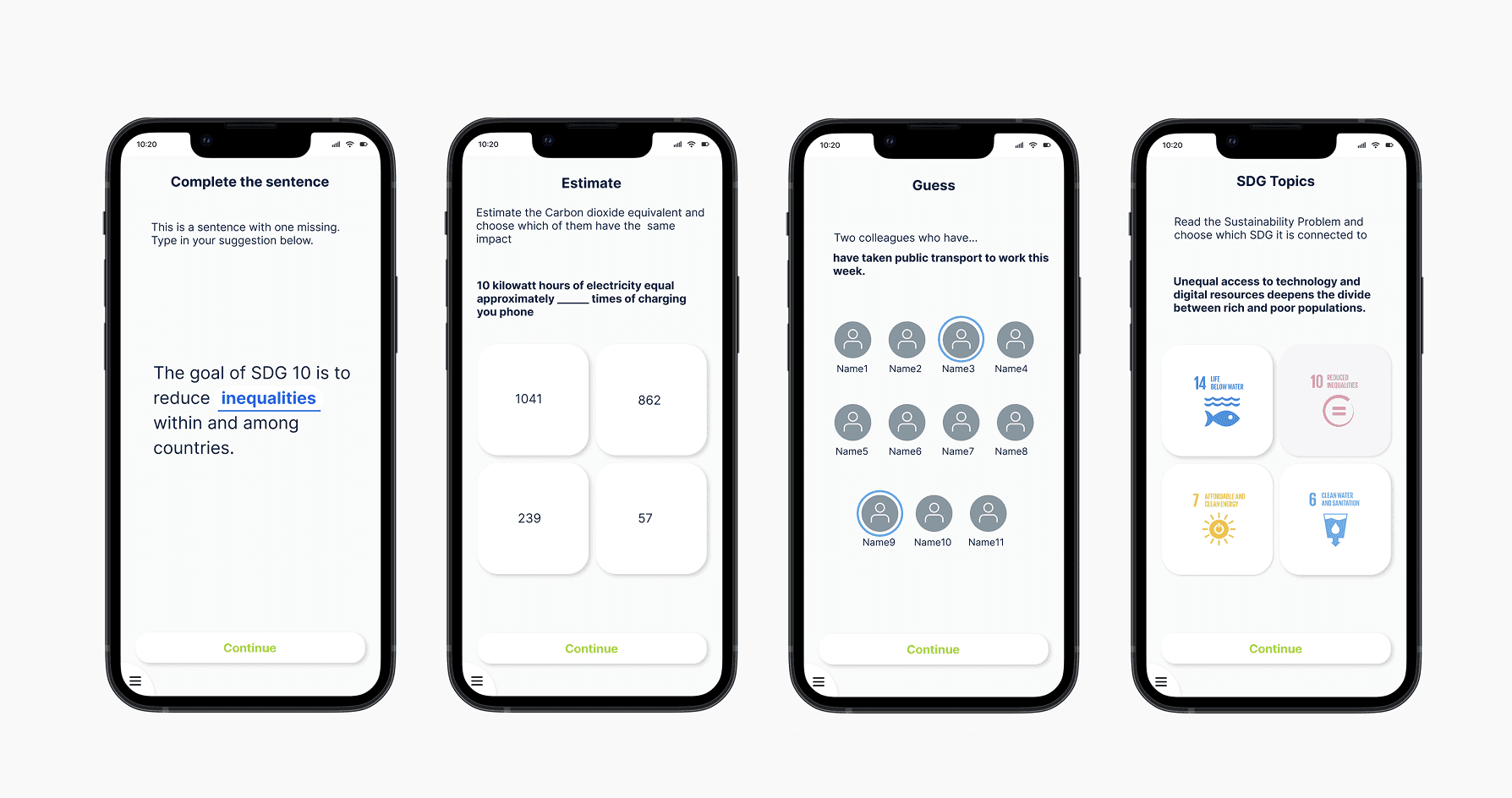
For the platform, I designed the UI for multiple views, including a learning-oriented experience (mobile first) with game elements and an admin dashboard (desktop interface).
I worked within the existing design system and added missing components where needed to support new functionalities. The overall look and feel was kept clean, light and minimalistic to reflect the sustainable values of the platform, while staying aligned with the existing brand visuals.
A new concept and UI design for the platform was developed. My learning from working on this project are that I'd ask earlier for a shared, regularly reviewed roadmap. I would have liked to include market data alongside the investor and user feedback for decisions and reviewed these with the team in regular intervals rather than in reaction to individual conversations with customers to reduce the number of times priorities shifted, and made it easier to validate decisions before committing design time to them.
These parts of the platform went live after I had moved on. Tracking the adoption of the configurable modules per customer as well as if the graphical progress view increased engagement with the learning flows would be interesting success measures to look at.
The further process for the platform includes iterations for functionalities of the administrators view and data visualisation. It is planned that user feedback and data will be collected to identify possible improvement points.